By Didik Prasetiyono
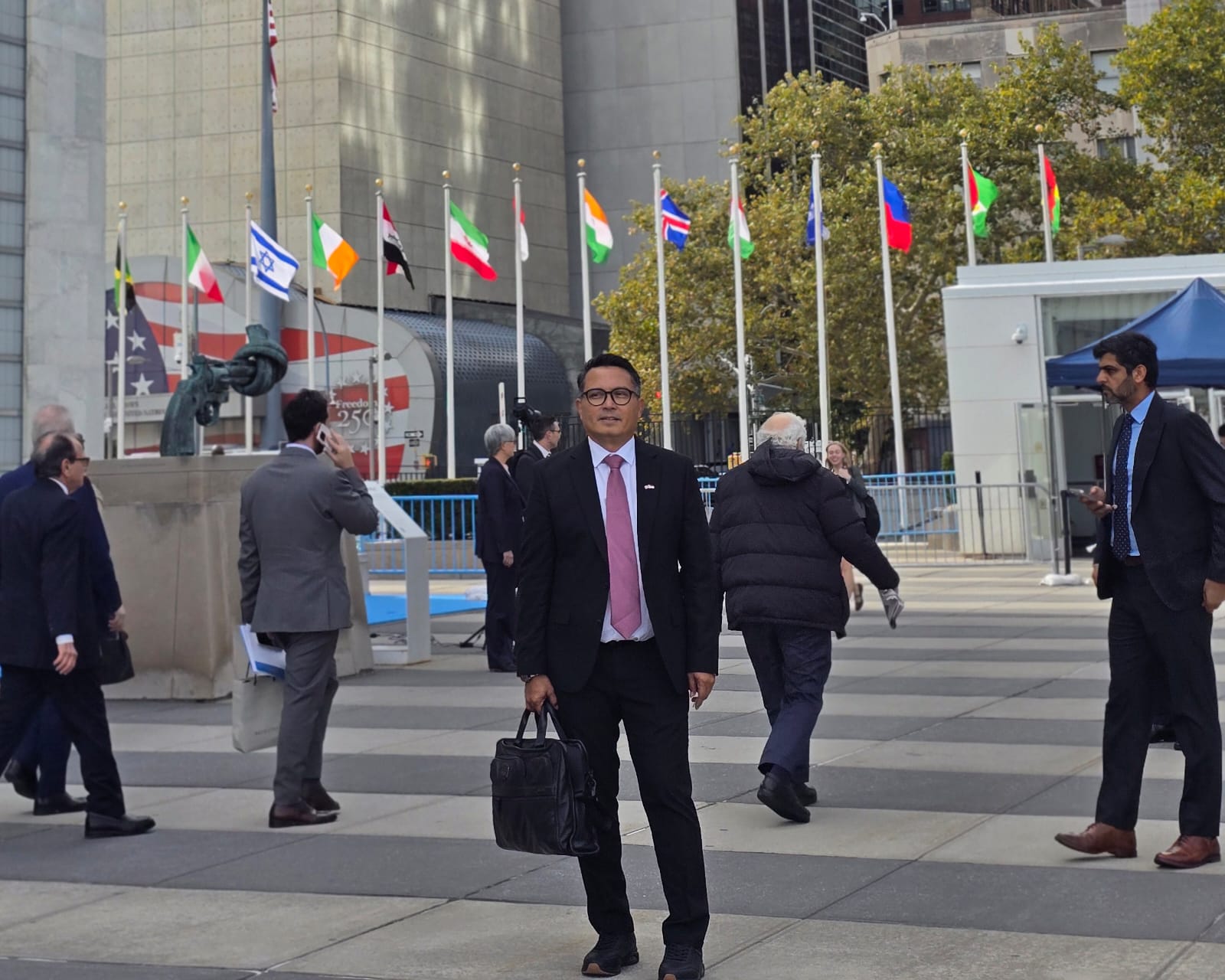
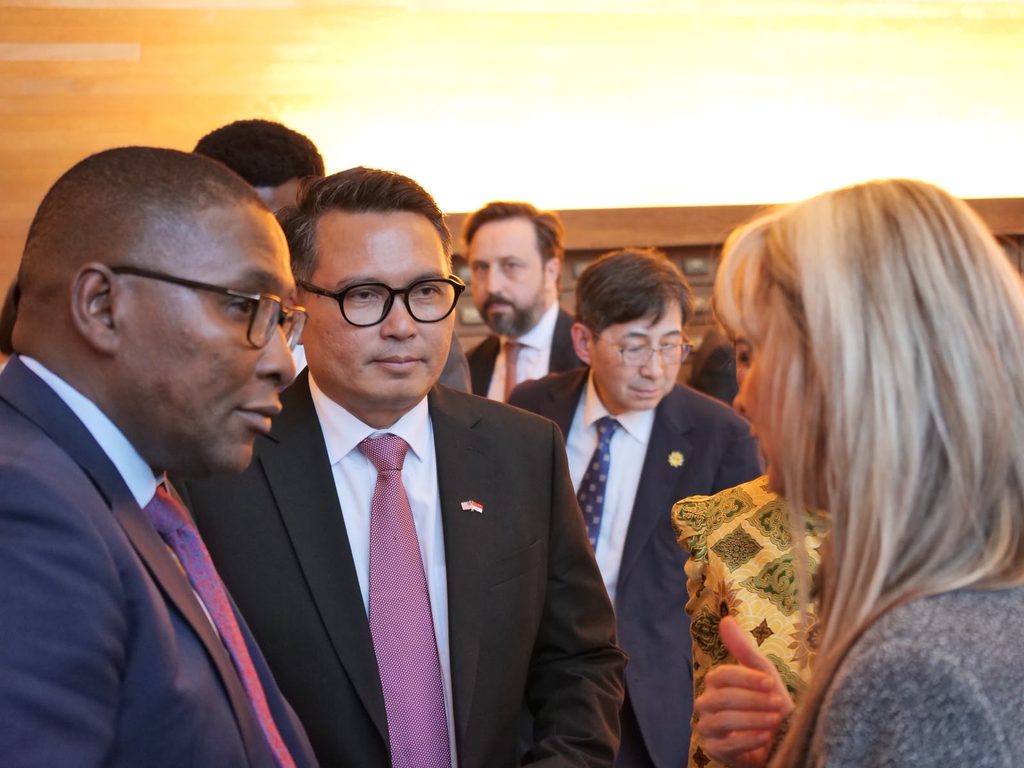
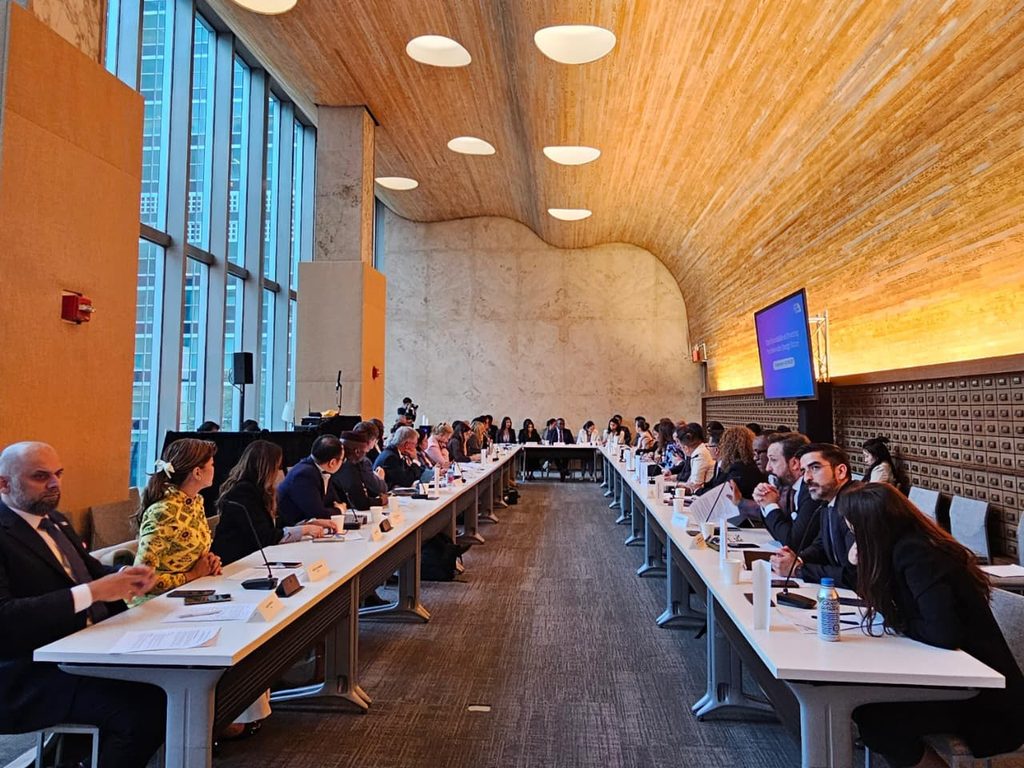
Vice Chairman of the Indonesian Industrial Estates Association (HKI); participant in the Global Solar & Battery Storage Industry Associations Gathering 2026 in New York, convened by Bloomberg Philanthropies, ClimateWorks Foundation, and the Global Solar Council, and the Third Roundtable on Powering the Renewable Energy Future at United Nations Headquarters, co-organized by the UN Secretary-General’s Climate Action Team and Bloomberg Philanthropies.
New York in the final week of September offered a vivid illustration of how energy has once again moved to the heart of global geopolitics. Wars and tensions between states, disruptions to trade routes, shifts in tariff policies, technological competition, climate change, and the rapid development of artificial intelligence all converged in the same conversations as heads of state and government, ministers, diplomats, business leaders, academics, and civil society representatives gathered for the High-Level Week of the 81st Session of the United Nations General Assembly (UNGA 81).
In his opening address to the General Debate on 22 September, UN Secretary-General António Guterres said that the world was confronting four “tests of power”: peace and security, inequality, climate change, and artificial intelligence. “The fault lines in our world are widening,” he said. His statement captured a reality in which economic, technological, security, and climate challenges are becoming increasingly difficult to separate. Energy sits at the intersection of these challenges. Recent years have provided ample evidence of how war can redirect supply flows, how disruptions to trade routes can affect prices, and how political decisions in one country can quickly reverberate through the economies of others. Ahead of UNGA 81, Guterres specifically highlighted the advantages of renewable energy from an energy-security perspective: sunlight and wind do not face the same supply-route risks as fuels that must pass through chokepoints such as the Strait of Hormuz or the Black Sea.
This is significant because it places renewable energy in a broader context. For years, the energy transition has been discussed primarily in terms of climate change and emissions reduction. Both remain essential. Yet wars, energy-price volatility, technological competition, and changes in trade policy have brought questions about the origin and security of energy supplies back to the forefront. This broader perspective was also evident during the Global Solar & Battery Storage Industry Associations Gathering 2026, convened by Bloomberg Philanthropies, ClimateWorks Foundation, and the Global Solar Council, and subsequently at the Third Roundtable on Powering the Renewable Energy Future at United Nations Headquarters. The discussions moved well beyond how many solar panels could be installed. The questions were more fundamental: Can the grid absorb the electricity generated? Is electricity available when it is needed? What is the cost of capital? Who will buy the electricity? And how can clean energy support industrial development and broader economic growth?
Brazil’s experience is particularly instructive. Rapid growth in solar and wind generation is increasingly encountering curtailment, where electricity that could otherwise be generated cannot be fully utilized because of grid constraints and insufficient system flexibility. This offers an important lesson for countries planning large-scale renewable energy expansion. Installed capacity is an easily visible metric, but what matters more to an economy is how much of that electricity it can ultimately use. Battery Energy Storage Systems (BESS) therefore featured prominently in the discussions. One analogy used in New York helps explain their role: transmission networks move energy from one place to another, while batteries move energy from one point in time to another. Electricity generated abundantly from solar energy during the day can be stored and used when generation declines, or demand rises.
Energy-storage technologies continue to evolve. Lithium-ion batteries remain dominant, but different systems require different solutions. Long-duration energy storage, thermal storage, pumped hydro, and other technologies are developing to serve different functions and durations. Renewable-energy growth therefore creates a broader investment requirement encompassing grids, storage, system flexibility, and demand management. The central issue is no longer simply how much renewable capacity can be built, but how the entire electricity system can evolve to accommodate it.
Ambitious Targets Require an Implementation Roadmap
Indonesia is entering a decisive phase. Electricity demand continues to rise alongside industrial growth and the emergence of new economic centers. At the same time, the government has set ambitious goals to expand renewable-energy capacity, including deploying solar power and energy storage on a much larger scale. Large targets naturally attract attention, but the harder work begins once those targets are set. How much capacity should be built each year? Where should it be located? What is the status and availability of the land? When will transmission lines and substations be ready? How much BESS capacity will be required? Who will use the electricity? These questions ultimately determine whether targets can be translated into projects.
Indonesia faces distinctive geographical challenges. Renewable-energy resources are not always located close to centers of demand. A region may possess significant solar potential, yet the surrounding grid may not have sufficient capacity to absorb large volumes of additional electricity. Elsewhere, rapidly expanding industrial estates require substantial, stable, and round-the-clock electricity supplies. Within Indonesia’s electricity system, PLN therefore plays a strategic role. New generation must ultimately be integrated into the system, electricity must be transmitted to demand centers, and reliability must be maintained as the generation mix changes. PLN’s 2025–2034 Electricity Supply Business Plan (RUPTL) incorporates renewable energy, energy storage, transmission infrastructure, and substations into the development of the national power system. The challenge then becomes one of synchronization: when will generation come online, when will the grid be ready, and when will demand materialize?
This challenge received particular attention during the UN Climate Summit 2026. On 23 September, UN Secretary-General António Guterres launched the Global Grids Accelerator, initially focusing on Africa and Southeast Asia, to accelerate investment in electricity infrastructure and help translate national and regional grid priorities into investable and operational projects. The initiative reflects an important shift in the global energy debate. Renewable generation alone is no longer enough. Transmission, distribution, storage, system flexibility, and the ability to connect new sources of demand are becoming equally important components of the transition. For Indonesia, this is particularly relevant because renewable-energy expansion, industrial growth, and new electricity-intensive demand need to be planned within the same infrastructure framework.
PLN, of course, cannot work alone. Private developers will account for a significant share of investment in the new generation, while demand growth is strongly influenced by investment decisions in the industrial sector. Central and regional governments control many aspects of permitting and spatial planning. Industrial estate operators understand the expansion plans of existing tenants and prospective investors, while financial institutions assess project risk. These stakeholders need to engage much earlier in the process. Indonesia therefore needs an energy roadmap with a strong spatial dimension, where maps of renewable-energy potential are considered alongside transmission networks, substations, land availability, energy-storage requirements, and the geography of emerging demand. Countries that have faced curtailment show how costly it can be when generation development and grid readiness advance at different speeds.
The next phase of the energy transition is therefore not primarily about setting more targets. It is about building the infrastructure, market arrangements, financing mechanisms, and investable projects that allow existing targets to be delivered.

When Energy Becomes an Investment Consideration
This shift is already evident in industrial estate development. For many years, discussions with prospective investors typically began with land: How much does it cost? What is its legal status? When will it be ready for development? The conversation would then move to roads, ports, water, waste treatment, labor, and permits. Today, questions about electricity arise much earlier and in far greater detail. Is sufficient capacity available? How reliable is the supply? What is the tariff? Can capacity be increased when a factory expands? And, increasingly, another question follows: Can the clean-energy attributes of that electricity be verified?
That final question is directly related to changes in global supply chains. Many companies have set their own decarbonization targets and must account for emissions from their production activities. Access to clean energy is therefore becoming a factor in investment-location decisions. For industrial estates, the quality of energy infrastructure is increasingly as important as other forms of physical infrastructure. Industrial estates also have an important characteristic from an energy-planning perspective: concentrated demand. Dozens, and sometimes hundreds, of companies operate within a single area. Their electricity loads, operating hours, expansion plans, and clean-energy requirements can be mapped more effectively than dispersed demand. Solar PV, BESS, grid infrastructure, energy-management systems, and the needs of companies within an estate can therefore be designed around actual demand profiles.
This has direct implications for financing. Many renewable-energy projects face a gap between technical potential and investment readiness. The resource may exist, and the technology may be available, but that does not necessarily make a project bankable. Certainty of electricity demand, offtake structures, grid readiness, permitting, cost of capital, and risk allocation are often more decisive than technical potential alone. This implementation challenge also surfaced in discussions on green industrialization during UNGA 81, where the emphasis increasingly shifted toward country-led industrial strategies, investable project pipelines, demand for low-carbon products, green industrial corridors, and financial mechanisms that reduce investment risk. The direction is increasingly clear: the energy transition and industrial transformation can no longer be planned as separate agendas.
This is where the concept of a Renewable Energy Zone becomes particularly relevant for Indonesia. An integrated geographical area or development corridor can plan energy resources, transmission infrastructure, storage, land, and user demand. Industrial estates can serve as key nodes because large-scale electricity demand directly intersects with production and investment activities. From this perspective, industrial estates should not simply be treated as electricity consumers at the end of the system. Their demand data can instead become an important input in determining where generation, transmission networks, substations, and energy storage should be developed.
Artificial intelligence and digital infrastructure add another dimension to this demand. The rapid expansion of AI and data centers is creating a new class of large electricity loads, and discussions during Climate Week NYC 2026 repeatedly highlighted the relationship between growing digital infrastructure, grid capacity, and access to reliable clean electricity. Global electricity demand from data centers is expected to rise rapidly toward 2030, while renewable generation, storage, and large-load projects are already competing for grid connections in many markets. For countries seeking data center and digital economy investment, this creates a strategic consideration: future competitiveness may depend not only on how much electricity can eventually be generated but also on how quickly reliable, competitively priced, and verifiably clean electricity can be delivered to new centers of economic activity.
Solar Energy, Batteries, and New Supply Chains
Batteries add another important industrial dimension for Indonesia. Global growth in BESS will increase demand for minerals, battery cells, modules, power conversion systems, software, system integration, and operations and maintenance services. Over time, demand will also grow for recycling and end-of-life battery management. Indonesia occupies a distinctive position because it stands on both sides of this equation: it possesses mineral resources important to the battery industry and has the potential to become a major market for energy storage.
That position gained additional relevance during the UN Climate Summit 2026 with the development of the Country Support Mechanism on Critical Energy Transition Minerals. Indonesia is among the initial participating countries in the mechanism, which is intended to help resource-rich developing economies derive greater development benefits from critical-mineral value chains while strengthening governance, domestic value addition, and environmental and social safeguards. For Indonesia, the underlying principle is highly relevant: the economic opportunity created by the energy transition should extend beyond extracting and exporting raw materials. Greater value can be created through processing, manufacturing, engineering, battery systems, system integration, recycling, and developing domestic technological capabilities.
Longer value chains can generate substantially greater economic value, but global markets are also placing greater emphasis on carbon footprints, material traceability, labor conditions, safety, community relations, and recycling. This is where environmental, social, and governance (ESG) principles become practically relevant—not as an additional label attached to energy projects, but as an integral part of supply chain quality and industrial management increasingly scrutinized by investors and global buyers. The Sustainable Development Goals can be viewed through the same lens. SDG 7 calls for access to affordable, reliable, sustainable, and modern energy. Each element carries practical implications for Indonesia: energy must become cleaner, but it must also remain available when needed and affordable for both households and industry.
The experiences shared by different countries in New York demonstrated the diversity of implementation challenges. Brazil is dealing with curtailment. Several African countries face high capital costs. Countries with higher renewable-energy penetration are increasingly focused on grid flexibility and market design. Island nations continue to grapple with dependence on imported fuels, while the battery industry is paying increasing attention to critical minerals and supply-chain transparency. Technology is moving quickly, and the systems surrounding it must keep pace.
Energy Resilience Amid Global Uncertainty
Geopolitical uncertainty gives renewable energy a different significance for Indonesia. The Russia–Ukraine war demonstrated how dependence on particular energy supplies can become both an economic and a security concern, while tensions in the Middle East have once again underscored the enormous influence that trade routes such as the Strait of Hormuz can exert over global energy markets. Indonesia cannot control wars, global commodity prices, or other countries’ trade policies, but it can reduce its vulnerability to these external developments.
This is where domestic energy resources acquire strategic value. Indonesia has sunlight, hydropower, geothermal resources, and wind. Every additional unit of energy that can be produced economically from domestic resources expands Indonesia’s options for meeting its energy needs and reduces its exposure to international fuel-price volatility. Energy independence, however, requires careful understanding. Solar panels, batteries, inverters, software, critical minerals, and various grid components all have international supply chains. Dependence on imported fuels should not simply be replaced by dependence on imported technologies and components.
Energy policy and industrial policy therefore need to move together. A large domestic market for solar and BESS technologies can be leveraged to build capabilities in manufacturing, engineering, system integration, software, operations and maintenance, and recycling. Not everything needs to be produced domestically. The key task is to determine which strategic capabilities Indonesia should develop and which components it can obtain more efficiently through international trade and cooperation. Energy independence does not mean that Indonesia must meet every requirement domestically or isolate itself from global trade. What matters is resilience: having a broader range of energy sources, technologies, and supply options when global conditions change.
Managing the Transformation
For Indonesia, the challenges of the energy transformation are becoming increasingly concrete. Capacity targets and transition commitments must translate into a system that works: energy must be available when needed, the grid must be capable of delivering it, storage must maintain system flexibility, and electricity costs must remain competitive for economic activity. Discussions in New York suggest that the global energy conversation is entering a new phase. The central question is increasingly not whether renewable energy should expand, but how rapidly growing renewable capacity can be integrated into electricity systems, financed, connected to demand, and translated into industrial and economic value.
The measures of success must therefore extend beyond installed capacity. The relevant questions are whether clean energy can reliably power factories and industrial estates; whether data centers requiring large amounts of electricity can access competitive energy from verifiable sources; whether new generation has the grid infrastructure required to deliver its electricity; whether batteries are deployed where the system actually needs them; and whether these projects are sufficiently bankable to attract financing. These questions are more meaningful than simply counting how many solar panels or batteries have been installed.
Indonesia has substantial resources, a large market, growing demand, and a significant industrial base. The task now is to connect generation location with the grid, the grid with energy storage, storage with demand patterns, and energy-development planning with the direction of industrial growth. Roads, ports, telecommunications, water infrastructure, and industrial estates have shaped the geography of Indonesia’s economic growth for decades. Energy infrastructure will increasingly shape its future geography. Electricity availability, grid reliability, storage capacity, energy prices, and access to clean energy will help determine where investment flows and where new industries emerge.
In an increasingly unpredictable world, the ability to generate more energy from domestic resources gives Indonesia greater room to respond to external shocks. But generation capacity alone is not enough. Energy must be storable when needed, deliverable where it is needed, and supplied at a reasonable cost. That is the central task of Indonesia’s energy transformation: not simply to build more renewable-energy capacity, but to ensure that clean energy can be delivered reliably, competitively, and at scale to the industries and economic activities that will shape Indonesia’s future. [*]